National AI Student
Challenge
Empowering students by providing them with the platform and resources needed to accelerate their AI learning journey, fostering innovation and cultivating the next generation of AI users, practitioners, and creators equipped to tackle real-world challenges.

Interactive Workshops
Immerse yourself in practical learning with interactive booths and workshops

Engaging Panel Discussions
Dive deep into the world of AI and its dynamic industry with engaging panel discussions

Vibrant Community
Forge connections with fellow AI enthusiasts, creating a vibrant community of like-minded individuals

Enhance Career Prospect
Expand your professional horizons by connecting with industry leaders and discovering career prospects
Supporting Partners





Objectives
- Encourage critical and creative thinking skills needed to navigate and adapt to the changing world
- Increase applications of AI technology
- Encourage active involvement in shaping future using AI technology
Eligibility Criteria
To be eligible to enter the Challenge :
(i) You must be a full-time student currently enrolled in a local Secondary School, Integrated Programme (IP) School, International School, Independent School, Junior College, Institute of Technical Education, Polytechnic and University, or Full-time National Servicemen (NSF).
(ii) If You and/or any of your team member(s) are below the age of 18 years old, your registration form must be accompanied by completed parental consent form(s) for You and/or your team member(s). Otherwise, your registration and Entry will be deemed incomplete and void.
(iii) If You sign-up as a Team, you may register up to 4 Team members. Ensure that all members fulfil criteria (i) and (ii).
(iv) Use your School / Institution email address. Do not submit using personal emails such as Yahoo or Gmail individual accounts as these will be rejected. NSF may use your personal email address.
Challenge Tasks
You will be required to do the following :
a. Successfully complete AI Singapore’s AI for Industry (AI4I)® – Literacy in AI; and
b. Choose either category to participate in :
i. Category A (No-Coding)
ii. Category B (With Coding)
c. Requirements :
i. You may only submit one Entry. Incomplete entries may be disqualified.
ii. Use your own laptop to participate.
iii. Specifically for Category B :
- You must use your own compute resource.
- Datasets will not be provided. You will need to build your own datasets that can best demonstrate your use case. Alternatively, You may use External Data (see Section 7 of the Challenge Terms and Conditions).
- If your Entry is shortlisted, you shall be notified, latest, by 14 February 2023 to present your solution on 17 February 2023 to a panel of judges. Your Entry shall be disqualified if you are unable to attend the presentation in-person.
Agenda
5 Dec 22
(Mon)
12:00
Registration Opens
– Participants to complete AI Singapore AI4I® – Literacy in AI (5-hour online course) latest by 6 Feb 2023
6 Jan 23
(Fri)
12:00
Start of Challenge
– Participants to visit the Challenge website for the following items :
– AI Singapore Welcome Video
– Problem Statements
– AI Brick Resources (for Category B)
– Participants to start working on their entries and submit their entries before 6 Feb 2023
12-13 Jan 23
(Thu-Fri)
15:00 – 17:00
(Optional) Online Consultation Sessions
Online sessions where participants from Categories A and B may ask questions to AI Singapore, including AI Bricks (for Category B)
6 Feb 23
(Mon)
23:59
End of Challenge
– Registration closes
– Submission deadline for entries for both Categories A and B
14 Feb 23
(Tue)
12:00
For Category B participants only
Announcement of shortlisted participants moving to Grand Final Presentation stage
17 Feb 23
(Fri)
16:00 – 17:00
For Category B participants only
Grand Final Presentation (In-Person)
20 Mar 23
(Mon)
Announcement of Winners for both Categories A and B
13 May 23
(Sat)
09:00 – 10:00
Prize Presentation Ceremony during the AI Student Developer Conference 2023
Judging/Evaluation Criteria
Category A
Category B
Prizes
Prizes by AI Singapore :
Category A
Top 5 Winners
Category B
Top 3 Winners
+ Special Prizes by Industry/Challenge Partners
Registration Is Now Closed
Enquiries
If you have any enquiry, visit our FAQs here (https://connect.aisingapore.org/community/national-ai-student-challenge/) or post your enquiry here (https://connect.aisingapore.org/community/aisg-all-programmes-national-ai-student-challenge/).

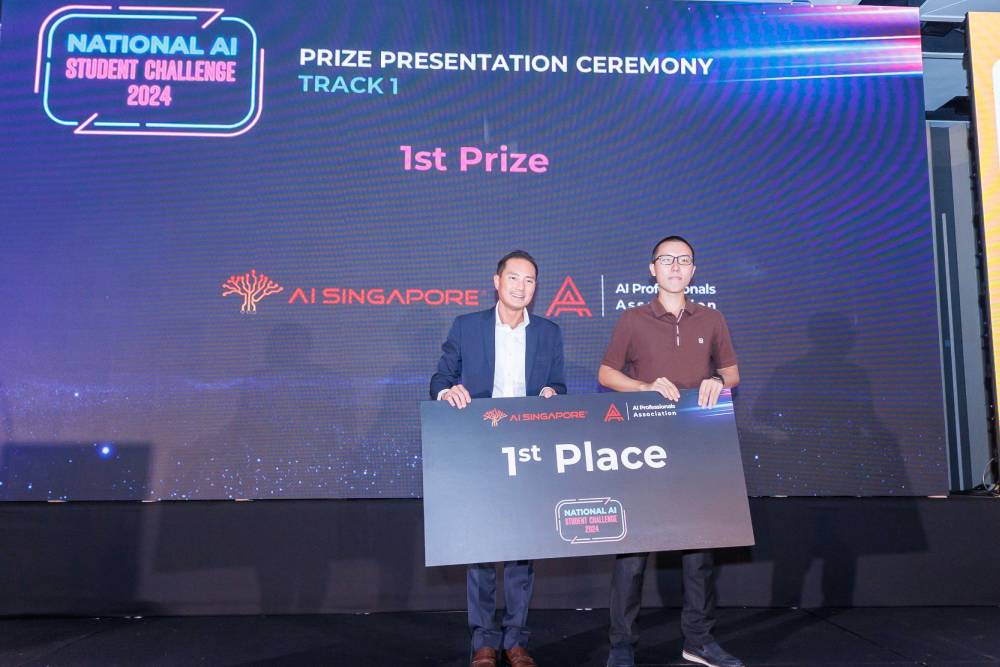
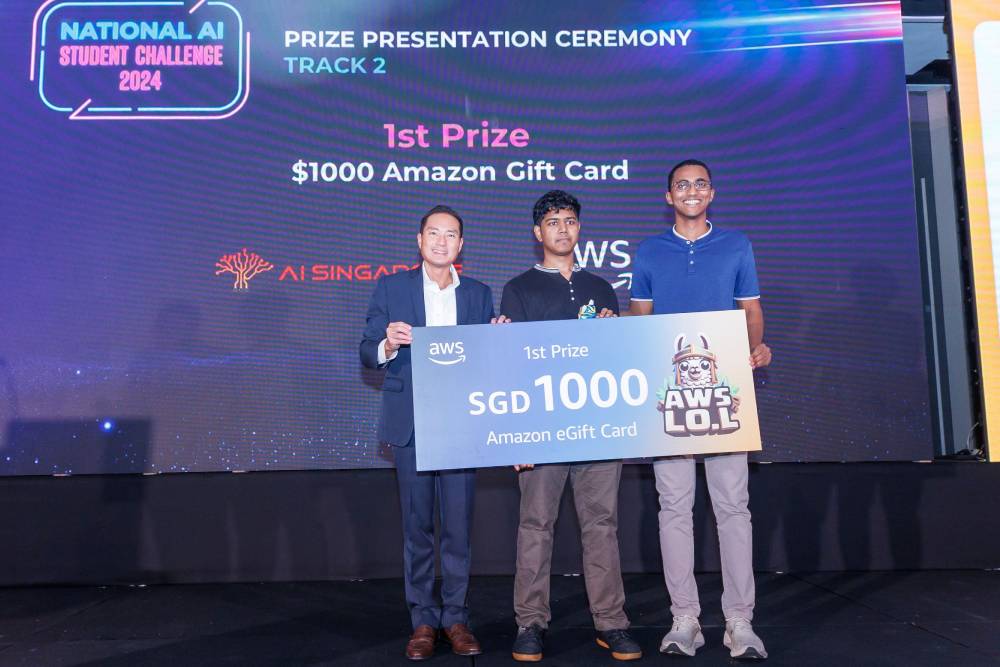
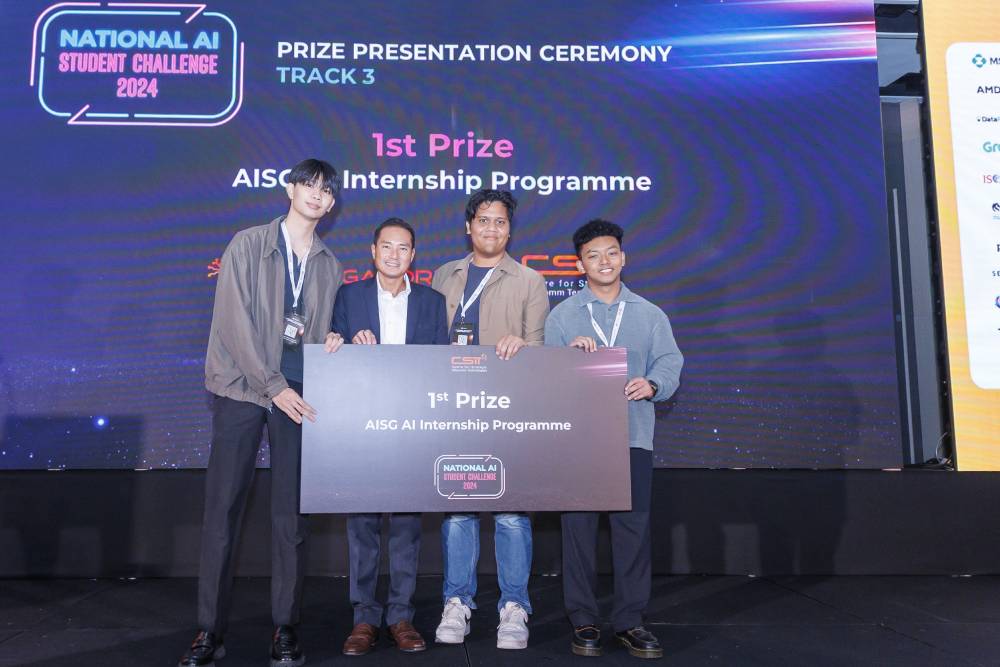
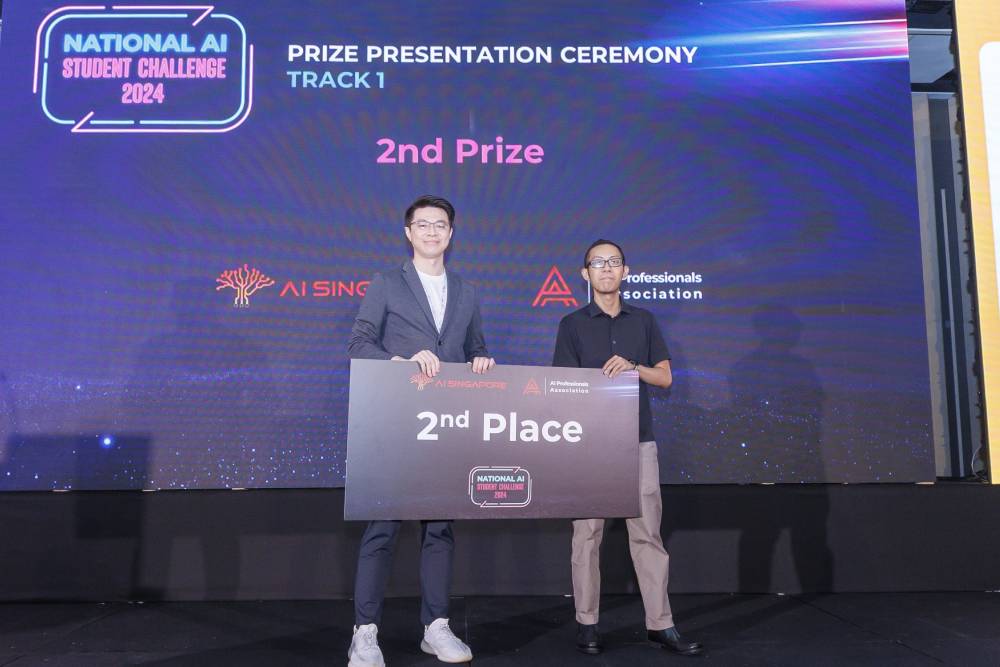
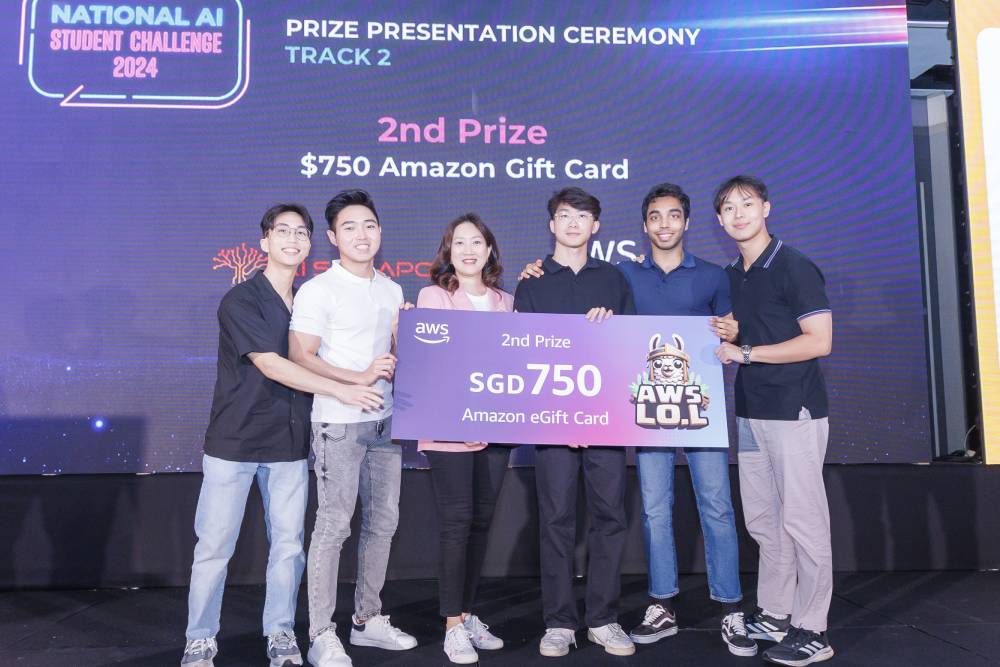
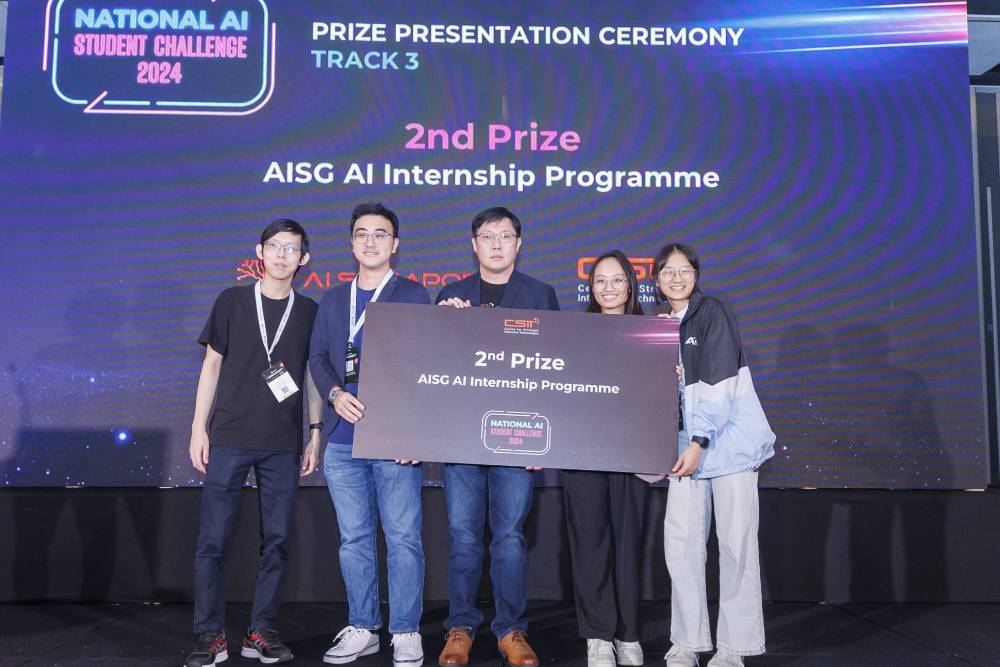
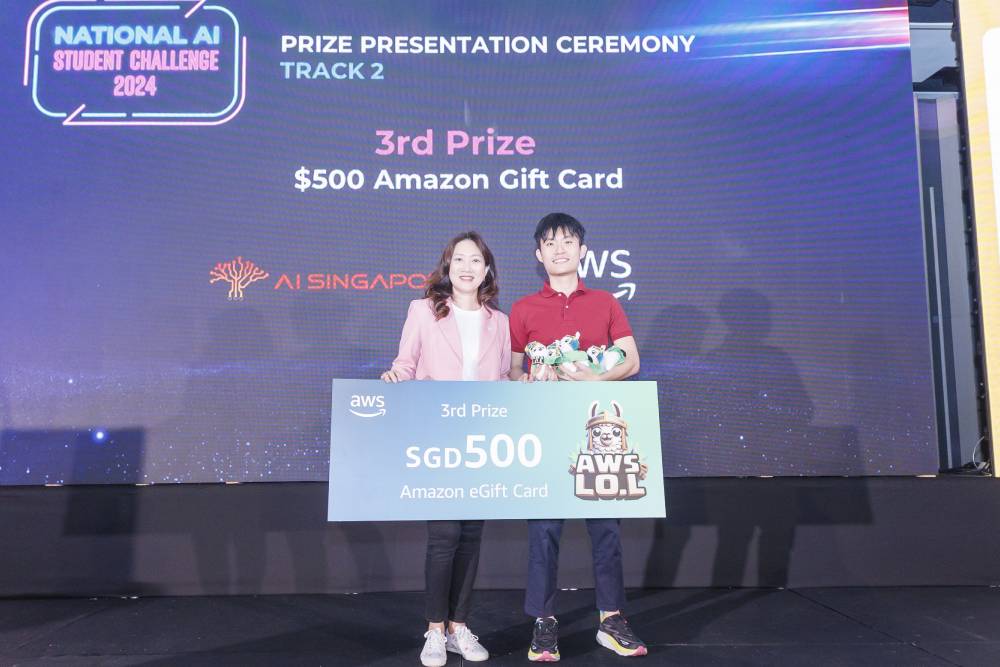
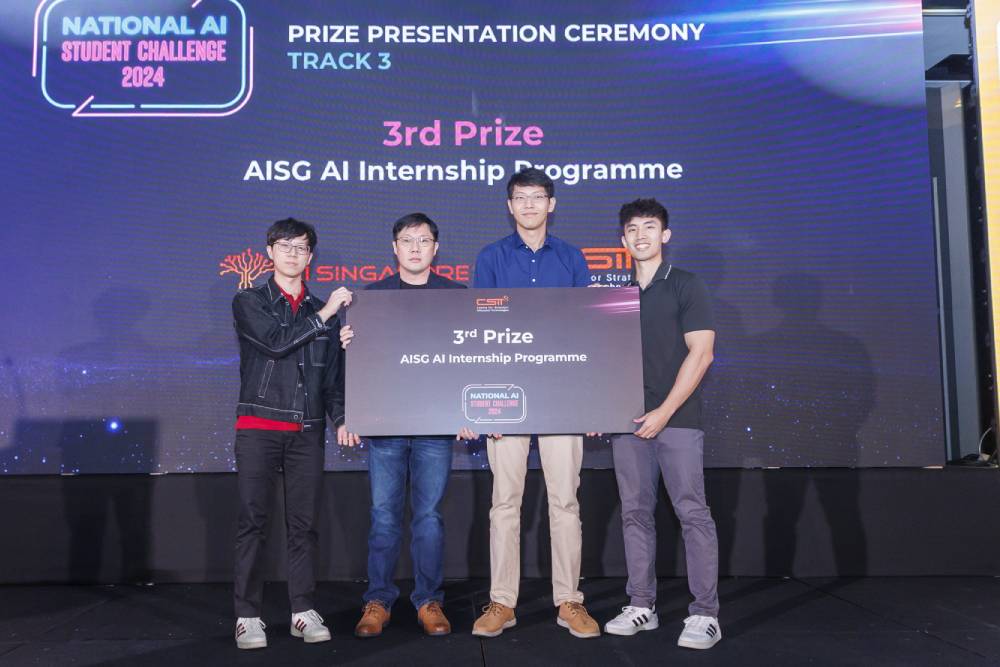
CONGRATULATIONS TO OUR 2024 WINNERS
Challenge Tracks
The National AI Student Challenge 2024 offers 3 Challenge Tracks, each with its own eligibility criteria and requirements.
- Step 1: Please carefully review the eligibility criteria for each of the Challenge Tracks below.
- Step 2: Kindly ensure that you meet the eligibility criteria before selecting your preferred Challenge Track.
- Step 3: Each Challenge Track has limited space. Secure your spot by applying promptly. Assignments are first-come, first-served. Successful applicants will be notified by 21 February 2024.
Timeline
| Date | Time | Remarks |
| 15 Jan | 12.00pm | Registration Begins |
| 14 Feb | 12.00pm | Registration Deadline |
| 15 Feb – 21 Feb | Offline | Assignment of Challenge Track |
| 24 Feb | 10am – 12pm | [Track 1 (AIP) & Track 3 (CSIT)] Welcome Session + Meet-the-Challenge-Partner Session (In-person) |
| 24 Feb | 10am – 1pm | [Track 2 (AWS)] Welcome Session + Meet-the-Challenge-Partner Session (In-person) |
| 20 Mar | 12.00pm | Submission Deadline |
| 21 Mar – 22 Apr | Offline | Shortlisting the Top 5 Grand Finalists per Challenge Track |
| 23 Apr | 12.00pm | Grand Finalists Revelation |
| 11 May | 9am – 5pm | Grand Final Presentation @ AI Student Developer Conference 2024 (In-person) |
Registration
Thank you for your interest in participating in this challenge. Due to overwhelming response, application to the challenge is now closed.
National AI Student Challenge 2024






Enquiries
If you have any enquiry, visit our FAQs – https://aisingapore.org/faqs/
About NAISC
AI Singapore, with support from the Infocomm Media Development Authority (IMDA), various partners, and sponsors, has been organizing the National AI Student Challenge, which has attracted over 2,000 participants to date. NAISC aims to empower students by providing them with the platform and resources needed to accelerate their AI learning journey, fostering innovation and cultivating the next generation of AI users, practitioners, and creators equipped to tackle real-world challenges.
NAISC 2025 – Highlight Video
NAISC 2025 – Challenge Tracks
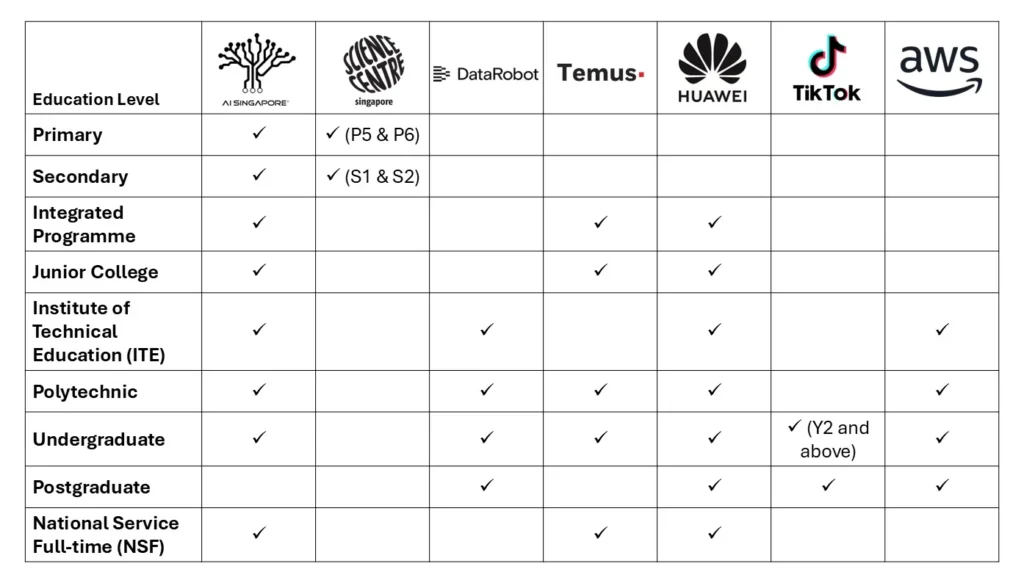
The National AI Student Challenge 2025 offers 7 Challenge Tracks, each with its own eligibility criteria and requirements.
- Step 1: Please carefully review the deliverables and eligibility criteria for each of the Challenge Tracks below.
- Step 2: Kindly ensure that you meet the skills and eligibility criteria before selecting your preferred Challenge Track. Note: Local Tracks are exclusively available to students studying in Singapore, while the AWS Track is open to regional students studying in Singapore, Malaysia, Indonesia, Vietnam, the Philippines, or Thailand.
- Step 3: Each Challenge Track has limited space. Registration is on a first-come, first-served basis and will close once all slots are filled, secure your spot by applying promptly. Successful applicants will be notified by 7 March 2025.
AI Singapore

| Mission: | Launched in May 2017, AI Singapore brings together all Singapore-based research institutions and the vibrant ecosystem of AI start-ups and companies developing AI products to perform use-inspired research, grow knowledge, create tools, and develop the talent to power Singapore’s AI efforts. LearnAI is a programme under AI Singapore, which aims to develop generational AI capability programs to build AI Aware and AI Ready Talents. This is done through the development of self-directed learning resources for students and working professionals, and the creation of a suite of programs to help students and professionals accelerate their AI learning journey. AI for Good is a branch of initiatives under LearnAI, focusing on outreach initiatives to underprivileged communities. This initiative seeks to bridge the digital divide by making AI resources, tools and knowledge accessible to those who may otherwise lack opportunities, creating meaningful and positive impact. Task: Using any AI Generation tools of your choice, design two related logos. 1. One for LearnAI 2. One for AI for Good Logos should align with the vision and purpose of AI Singapore, emphasizing the identity of each initiative. While specific themes are not provided, participants should ensure that the logos reflect the intended purpose effectively. |
| Skills and Tools: | • Prompt Engineering • Any Open-source GenAI image generating • [Optional] Adobe Illustrator or Photoshop for post-editing the designs but changes must be documented |
| Deliverables: | Each team is to submit: (i) Two (2) AI generated logos (1 for LearnAI, 1 for AI for Good) (ii) One (1) recorded video presentation illustrating the process and ideation behind both logos (maximum 10 minutes duration); (iii) A journal entry detailing each logo’s significance and meaning, as well as the prompts and models used with screenshots and detailed documentation of prompting techniques and the iteration process (maximum 5 pages excluding appendices) |
| Eligibility: | • Full-time students currently enrolled in Primary, Secondary, Integrated Programme School, Junior College, Institute of Technical Education, Polytechnics, University (Undergraduate) or Full-time National Serviceman (NSF) • 1 to 3 person(s) per team • For Primary & Secondary Students, registration is only strictly via your school teacher, coach or parent. The school teacher, coach, or parent will act as the Point of Contact (POC) to help coordinate and form the team. Students will participate in this challenge in their personal capacity. |
| Evaluation: | • Logo design • Cohesiveness: how well the two logos complement each other • Significance: how well the logos represent the purpose and vision of LearnAI and AI for Good • Prompting Techniques • Presentation Skills |
| Prizes: | • A certificate of participation will be awarded to all participating teams. • The top three (3) winning teams for each task will receive one (1) trophy per team and medal for each team member. • Winning logos will serve as inspiration for AI Singapore in creating the final LearnAI and AI for Good logos. Credits will be given to the winners. |
| Important Dates: | • Meet the partner session / Challenge Announcement – 13 March (Online) • Award Ceremony – 29 May |
| Registration: | Registration for AI Singapore track has closed |
Science Centre Singapore

| Mission: |  About New Science Centre The new Science Centre welcomes people of all ages to reimagine STEM (Science Technology Engineering Math) experiences. In addition to enjoying and exploring science exhibits, visitors will be able to participate in workshops, exhibitions, and seminars around real-world issues like sustainability and climate change, and emerging technologies like generative Artificial Intelligence. The new Science Centre will be a place for the community, integrated with the surrounding landscape, with lush gardens and spaces for all to enjoy. KidsSTOP, the children’s science gallery, will be more than twice its current size . It will feature interactive exhibits and activities that encourage science exploration through play. Click here for more information and pictures of the new Science Centre! Task 1: The New Science Centre will be a place that welcomes all ages to explore STEM (Science Technology Engineering Math). Design and share your vision of an experience that people from all walks of life could enjoy at the New Science Centre. Task 2: The new KidsSTOP children’s gallery will feature hands-on, interactive exhibits that encourage exploration for young children. Design a new children’s mascot for KidsSTOP that represents two or more of these values: 1. Joyful exploration 2. Creativity 3. Resilience 4. Empathy |
| Skills and Tools: | • Imagination • Prompt Engineering • Open-source GenAI image generating |
| Deliverables: | Each team is to submit: (i) Two (2) GenAI images (1 image per challenge statement) AND (ii) One (1) combined physical presentation explaining both solutions (maximum 4 minutes duration) at the AI Student Developer Conference (28/29 May 2025) |
| Eligibility: | • Students from Primary 5 to Secondary 2 in local MOE schools • 1 to 3 person(s) per team • Registration is only strictly via your school teacher • Maximum of 3 teams per school • The school teacher will act as the Point of Contact (POC) to help coordinate and form the team. Students will participate in this challenge in their personal capacity |
| Evaluation: | • Novelty of the solution • Effective use of GenAI to visualise the solution • Presentation of the solution |
| Prizes: | • Each member from the Top Three (3) Teams for each challenge statement will receive one (1) pair of tickets to Science Centre Singapore and the Omni-Theatre show. (Ticket validity to be advised upon presentation of prizes. Terms and conditions apply.) • A certificate of participation will be awarded to all participating teams. • The top three (3) winning teams for each task will receive one (1) trophy per team and medal for each team member. |
| Important Dates: | • Meet the partner session / Challenge Announcement – 13 March (Online) • Physical Presentation – 29 May • Award Ceremony – 29 May (PM) |
| Registration: | Registration open till 15 April 2025 Science Centre Singapore Track Registration |
DataRobot

| Mission: | Theme: Predictive Maintenance Goal: Develop a machine learning model to predict equipment failures in advance by analyzing sensor data including vibration, temperature, pressure, and operational metrics from industrial machines. The model should classify machines into ‘Healthy’, ‘At Risk’, and ‘Critical’ states, enabling maintenance teams to schedule repairs proactively and reduce unplanned downtime. Historical maintenance logs and sensor readings from the past years will be provided, including timestamps of actual failures and repairs. Theme: Demand Forecasting Goal: Create a forecasting model to predict service demand levels in advance across different service categories and locations. Using historical transaction data, customer demographics, seasonal patterns, and local event calendars, the model should output daily demand estimates to optimize staff scheduling and resource allocation. The success metric is MAPE (Mean Absolute Percentage Error) of predicted vs. actual demand – with a target accuracy to be prescribed. |
| Skills and Tools: | • Python & Software Engineering skills are optional. Your primary tool will be DataRobot’s AI Platform. Platform access & training to DataRobot will be made available. • You are permitted to use any other open-source resources to enablement the development of the AI Solution. • Any available datasets related to the problem statement(s) will be provided. You may obtain publicly available datasets / documents as required. |
| Deliverables: | Each team is to present: • Team’s approach to the problem statement, The AI Solution (Predictive AI x Generative AI), Challenges Faced, Reflections of the Challenge • Video demonstration of the AI Solution |
| Eligibility: | • You must be a full-time student currently enrolled in a Institute of Technical Education, Polytechnic, University (Undergrad), Post-graduate • 2 – 3 person(s) per team |
| Evaluation: | • Impact of the solution • Novelty of the solution • Performance and efficiency of the solution • Presentation skills |
| Prizes: | Potential Internships Opportunities for Top 3 Winners |
| Important Dates: | • Meet the partner session / Challenge Announcement – 12 March (AM) • Final Presentation & Award Ceremony – 28 & 29 May |
| Registration: | Registration for DataRobot track has closed |
Temus

| Mission: | Ignite your imagination with Temus customizable, programmable, and interactive GenAI Avatar! The mission? Think outside the box and explore bold, creative ways to deploy this cutting-edge tech across limitless real-world scenarios. |
| Skills and Tools: | • Python programming language • Remaining tools will be provided during the hackathon |
| Deliverables: | Each team is to submit: (i) A powerpoint deck/word document of the problem statement and use case that the GenAI avatar will be used for (ii) A working demo of the GenAI avatar with its customized voice, personality, face |
| Eligibility: | • You must be a full-time student currently enrolled in an Integrated Programme School (e.g. International Baccalaureate / NUS High Diploma), Junior College, Polytechnic, University (Undergrad), Full-time National Serviceman (NSF) • 2 – 5 person(s) per team |
| Evaluation: | • Creativity of use case/problem statement identified • Creativity of the GenAI avatar implementation • Presentation skills (clarity and engagement) |
| Prizes: | Potential Internships Opportunities for Top 3 Winners |
| Important Dates: | • Meet the partner session / Challenge Announcement – 11 March (AM) • Final Presentation & Award Ceremony – 28 & 29 May |
| Registration: | Registration for DataRobot track has closed |
Huawei

| Mission: | Theme: AI in Smart City Singapore, as a rapidly evolving urban landscape and one of the world’s most densely populated countries, faces substantial challenges in its digital transformation journey while striving to maintain safety, efficiency, and a high quality of life for its residents. Huawei’s mission to bring digital solutions to every person, home and organization for a fully connected, intelligent world resonates with Singapore’s digitalization goals. Huawei is committed to help accelerate Singapore’s transformative journey into an AI-first Smart Nation. Track 1: Reinforce Public Safety and Emergency Response • Develop a predictive analytics model that can identify high-risk areas and forecast the likelihood of incidents such as fires, crimes, or natural disasters, enabling proactive deployment of resources. • Design a cloud-connected emergency response system that integrates data from various data sources to coordinate the dispatch of first responders and provide real-time situational awareness. Track 2 – Improve Citizen Engagement and Civic Services • Create a mobile app or web platform that allows citizens to report issues (e.g., potholes, illegal dumping, street light outages) and track the progress of their requests, leveraging cloud-based workflows and AI-powered categorization. • Develop a conversational AI assistant that can help citizens access municipal services, answer questions, and provide personalized recommendations based on their location and preferences. |
| Skills and Tools: | • Advanced Analytics • Cloud Technologies • Full Stack Development • ML Algorithms (LLM, VLM, NLP, Computer Vision etc) • MLOps |
| Deliverables: | (i) Solution proposal in Word or PDF format. (ii) End-to-end code solution hosted on GitHub Repository. (iii) For example, teams are expected to submit the following, but not limited to: a. Model training, testing and deployment, etc. b. Frontend UI design and implementation, API endpoints, workflows orchestration, databases configuration, infrastructure setup, etc. (iv) Final presentation slides in PowerPoint format. |
| Eligibility: | • You must be a full-time student currently enrolled in an Integrated Programme School (e.g. International Baccalaureate / NUS High Diploma), Junior College, Institute of Technical Education, Polytechnic, University (Undergrad) or Full-time National Serviceman (NSF) • 2 – 4 person(s) per team |
| Evaluation: | Huawei’s NAISC mission emphasizes the following two main objectives: 1. Self-regulation among citizens—inspiring proactive behaviors that contribute to public safety and sustainability without relying on constant oversight. 2. Innovative uses of open-source data—transforming raw information into valuable assets that enhance city services and infrastructure. We invite teams to focus on these objectives, exploring how they can drive community-driven change and bring forward new applications for existing data within Singapore’s Smart City framework. * Bonus will be given to teams that implement their solutions leveraging Huawei Cloud technologies (Huawei Cloud credits will be provided). |
| Prizes: | • Potential Internships Opportunities for Top 3 winning teams • Huawei Products for top 1 team |
| Important Dates: | • Meet the partner session / Challenge Announcement – 12 March (AM) • Final Presentation & Award Ceremony – 28 & 29 May |
| Registration: | Registration for Huawei track has closed |
TikTok

| Mission: | Develop a Multimodality Large Language Model or Agent |
| Skills and Tools: | • Model Finetune • Prompt Engineering • Python Programming Language • Any open-source resources or commercial model api to enable the development of the M-LLM or Agents. |
| Deliverables: | (i) One slide of the developed LLM-powered solution, including description of the design architecture. (ii) Video demonstration of the LLM-powered model or agent. (iii) Including a text description that should explain the features and functionality of the project. Text description should also include: a. The relevant problem statement b. Development tools used to build the project c. APIs used in the project d. Assets used in the project, including models and datasets e. Libraries used in the project (iv) Include a link to the team’s public Github repository with README file. You could work towards rebuilding the results of your solution on benchmark. (v) Results of the solution on benchmark. Results are to be obtained by machine’s execution and not by human intervention. |
| Eligibility: | • You must be a full-time student currently enrolled in an University (Undergrad from Y2 and above) or Postgraduate • 2 – 5 person(s) per team |
| Evaluation: | • Score on benchmark • Novelty of the solution • Performance and efficiency of the solution • Presentation |
| Prizes: | • Opportunity for accelerated TikTok internship assessment process for Top 3 winning teams • Cash Prizes for the top 1 team |
| Important Dates: | Meet the partner session / Challenge Announcement – 11 March (AM) Final Presentation & Award Ceremony – 28 & 29 May |
| Registration: | Registration for TikTok track has closed |
Amazon Web Services (AWS)

AI Singapore is partnering with AWS to launch the Regional LLM League for students in ASEAN, focusing on Singapore, Malaysia, Indonesia, Vietnam, the Philippines, and Thailand. The LLM League is a comprehensive program designed to educate and empower individuals, particularly those from underserved and underrepresented groups, in the rapidly evolving field of generative AI. Through this initiative, we aim to equip students from diverse backgrounds with the skills and confidence to build future-ready Generative AI applications.
| Mission: | Develop or fine tune a large language model (LLM) with Amazon Sagemaker Jumpstart, that can outperform a reference LLM model and other competing models in a quiz-based evaluation. |
| Skills and Tools: | Cloud Computing e.g. Amazon Sagemaker / Partyrock. Access and training for Sagemaker / Partyrock will be provided. Students located outside of Singapore can join via Zoom or access the recorded training videos. |
| Deliverables: | A fine tuned or trained large language model submitted for competitive evaluation by deadline. Initial dataset will be provided during training workshops. Other datasets will not be provided. You will need to build your own datasets that can best finetune your LLM model to win. |
| Eligibility: | • For Singapore Students: You must be a full-time student aged 18 or above currently enrolled in an Institute of Technical Education (ITE), Polytechnic, University (Undergrad), or Postgraduate program. • For Students from Other Countries: You must be a full-time student aged 18 or above, currently enrolled in a tertiary institution in Malaysia, Indonesia, Vietnam, the Philippines, or Thailand. • 1 person per team |
| Evaluation: | • Top teams on an open leaderboard with best performing models will be selected for finals. Details of evaluation criteria will be shared during the briefing. • The top team from each country will represent in-person their nation in the Regional LLM League competition at the AI Student Developer Conference in Singapore on May 28 & 29. |
| Prizes: | • Potential Internships Opportunities or mentorship for top winning teams. • Amazon vouchers to be won by top winning teams. |
| Important Dates: | Meet the partner session / Challenge Announcement – 14 March (AM) Physical & Online Final Presentation & Award Ceremony – 28 & 29 May |
| Registration: | Registration for AWS track has closed |
Registration
The National AI Student Challenge 2025 has concluded.
Stay tuned for the National AI Student Challenge 2026!
Timeline
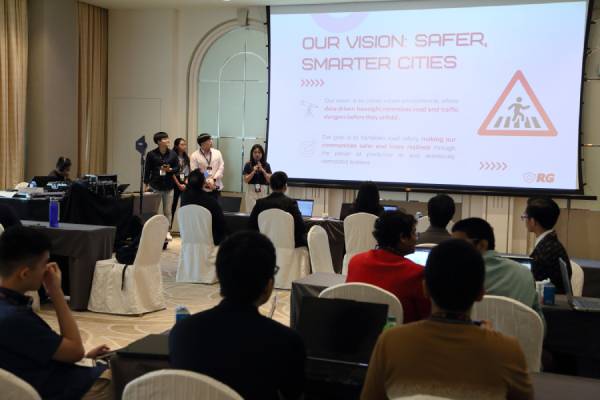
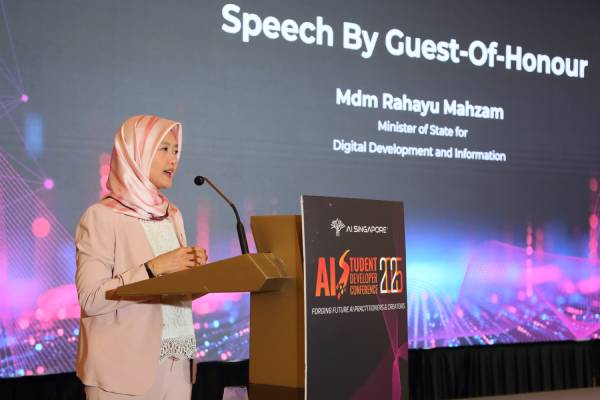
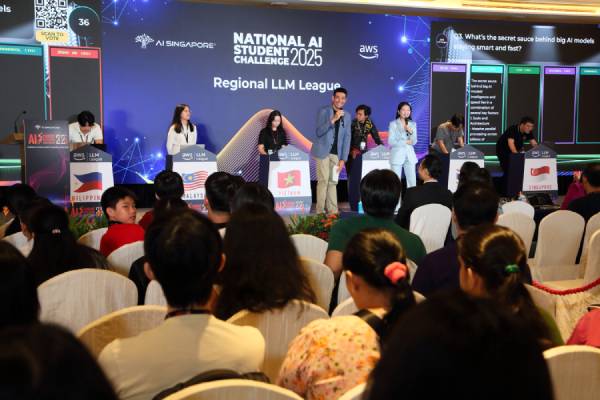
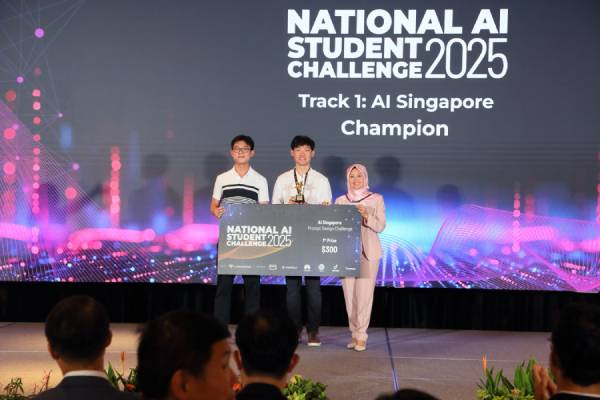
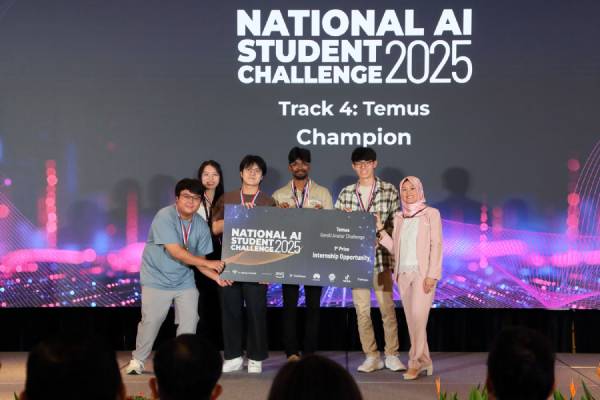
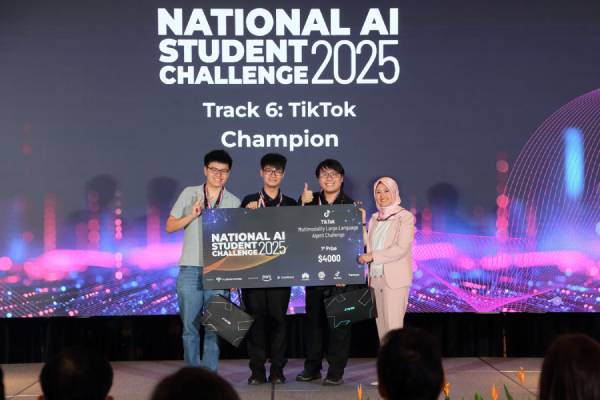
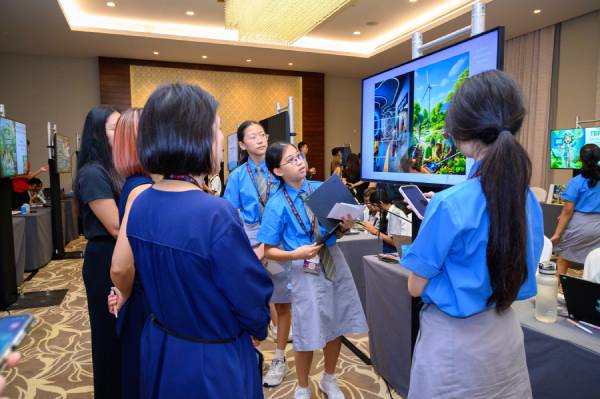
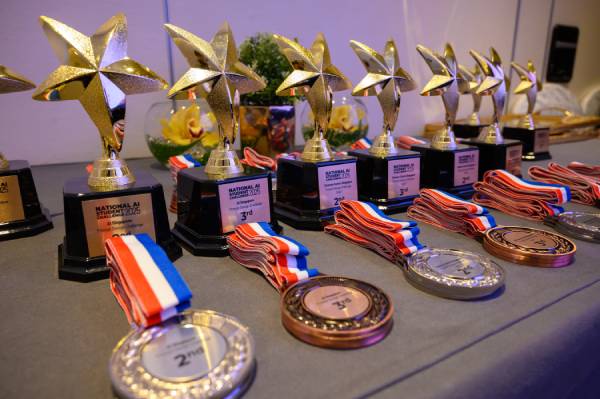
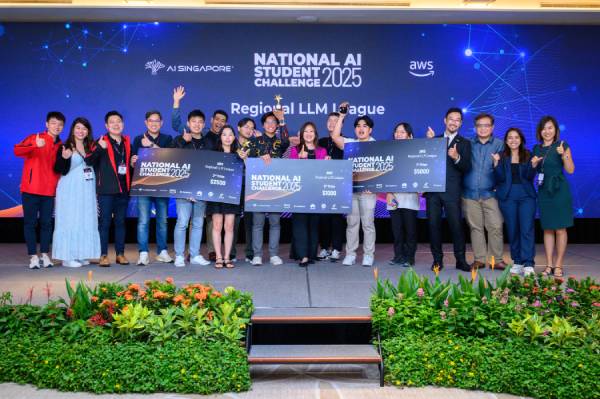
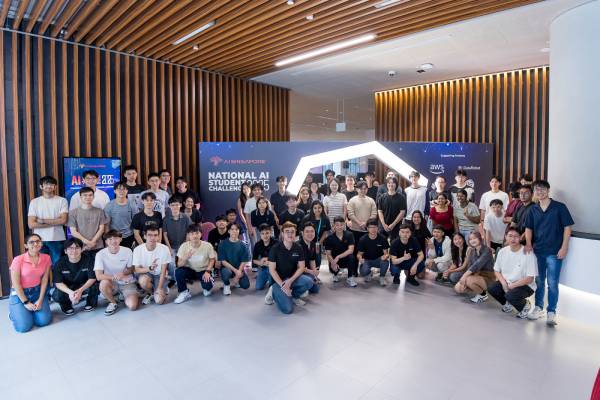
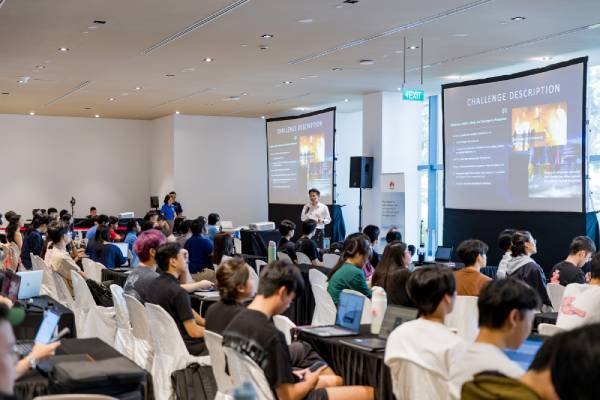
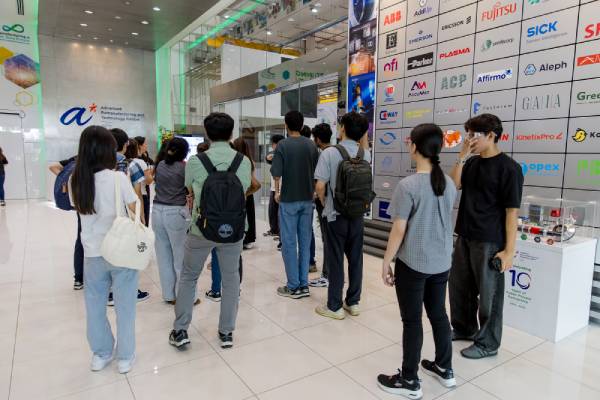
NAISC 2025 – Gallery
Enquiries
For enquiries, please contact learn-admin@aisingapore.org
NAISC 2026 – Highlight Video
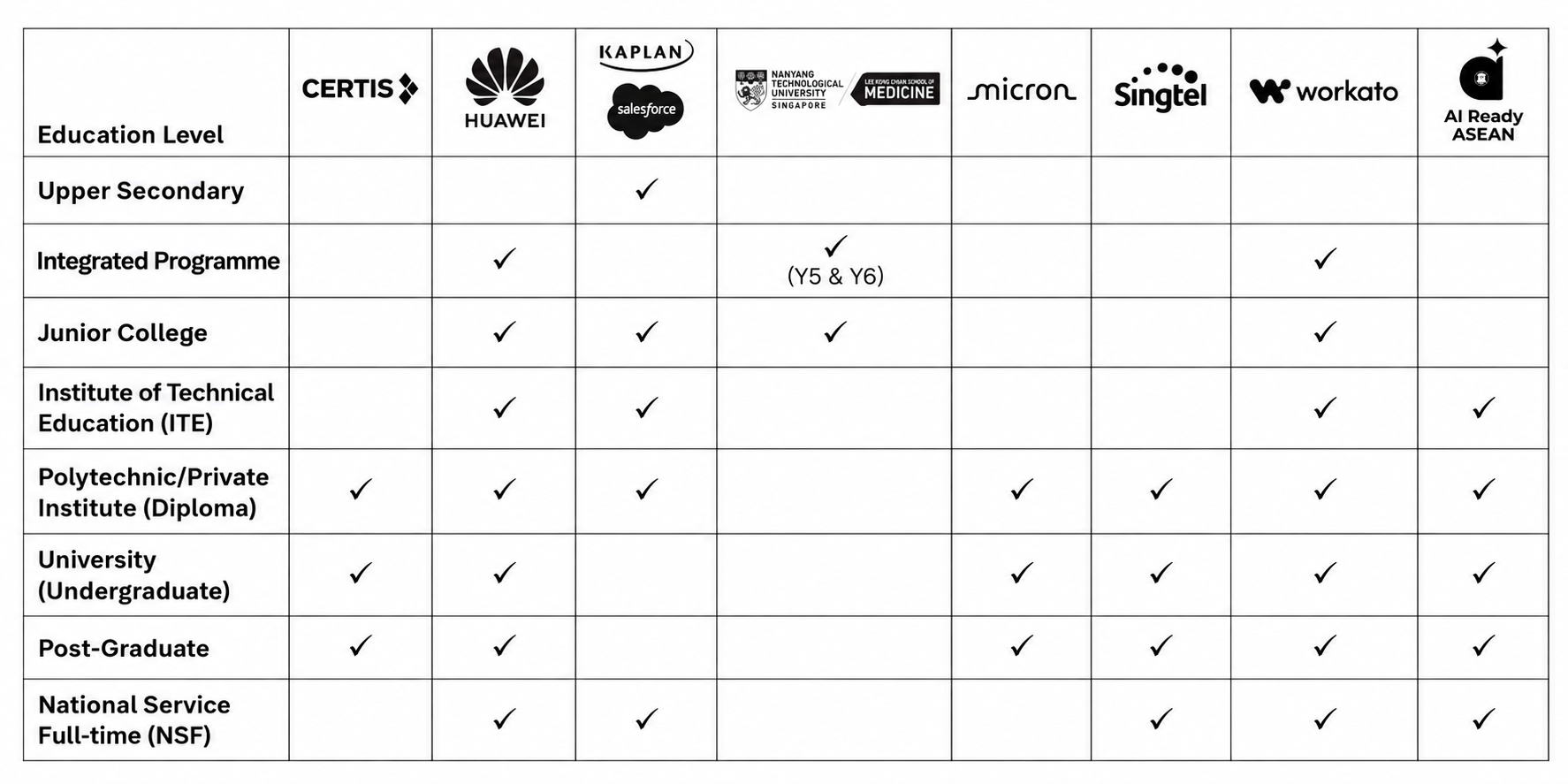
NAISC 2026 – Challenge Tracks
The National AI Student Challenge 2026 offers 8 Challenge Tracks, each with its own eligibility criteria and requirements.
- Step 1: Please carefully review the deliverables and eligibility criteria for each of the Challenge Tracks below.
- Step 2: Kindly ensure that you meet the skills and eligibility criteria before selecting your preferred Challenge Track. Note: Local Tracks are exclusively available to students studying in Singapore, while the AI Ready ASEAN Track is open to regional students studying in Singapore, Brunei, Cambodia, Indonesia, Laos, Malaysia, Myanmar, the Philippines, Thailand or Vietnam.
- Step 3: Each Challenge Track has limited space. Registration is on a first-come, first-served basis and will close once all slots are filled, secure your spot by applying promptly. Successful applicants will be notified by 23 February 2026.
Certis

| Mission: | Develop a Multimodal Security Response Advisor that helps officers assess incidents, recommend proportionate responses, and reinforce best practices using publicly available security guidelines and scenario-based examples. Input Considerations: • CCTV footage and live camera feeds • Panic or distress calls from intercoms (e.g., lift breakdowns, accidents) • Access control logs and door alarms • Motion or intrusion sensor alerts Note: Inputs are not limited to the above; teams may incorporate other relevant data sources or modalities. Expected Output: Context-aware and proportionate response recommendations aligned with standard security procedures and good practices. Outputs can take various forms and are not limited to a text-based chatbot – participants are encouraged to explore diverse interaction modes or interfaces. |
| Skills and Tools: | • Model Finetuning • Prompt Engineering • Python Programming • Any open-source resources or API to enable the development of this agent |
| Deliverables: | • Slides on the developed agent, including design architecture, agent features, and future enhancements. There should also be a video demo recording of your agent on the slides. • Live demo of the developed agent [capped to 5 mins during NAISC Grand Finals] • Link to GitHub repository with README file |
| Eligibility: | • You must be a full-time student currently enrolled in a Polytechnic, University (Undergraduate) or postgraduate programme. • 2 – 5 person(s) per team |
| Evaluation: | To be confirmed |
| Prizes: | • Potential Internships Opportunities for Top 3 winning teams • Cash Prizes for Top 3 winning teams |
| Important Dates: | • Meet the partner session / Challenge Announcement – 6 March • Final Presentation & Award Ceremony – 22 & 23 May |
| Registration: | Registration open till 16 February 2026 (1200 SGT) Certis Track Registration |
Huawei

| Mission: | Smart Multi-Agent System for Anomaly Detection and Predictive Maintenance Critical infrastructure and industrial systems such as energy grids, water treatment plants, transportation networks, and manufacturing facilities—generate massive streams of operational and sensor data every second. Ensuring reliability, resilience, and security in these complex environments is challenging: traditional monitoring methods are largely reactive, addressing problems only after they occur, which can lead to costly downtime, safety risks, and operational inefficiencies. Key challenges for AI solutions include: • Real-time anomaly detection: Identifying unusual patterns in sensor or operational data, including potential cyber-physical threats. • Predictive insights: Anticipating equipment degradation, system failures, or cascading impacts before they occur. • Decision support and explainability: Providing actionable, understandable insights to help human operators respond effectively. • Adaptive and collaborative intelligence: Leveraging AI approaches that can simulate, reason, or collaborate—such as agent-based methods—to monitor, predict, and act across interconnected systems. Hackathon participants are encouraged to explore innovative AI solutions, including intelligent agents or multi-agent approaches, to create systems that can proactively detect issues, coordinate responses, and enhance overall operational awareness. |
| Skills and Tools: | • Agentic Solutions: Designing AI agents that act autonomously or semi-autonomously. • Situational Awareness: Building systems that monitor and interpret complex environments. • Human-in-the-Loop AI: AI agents assisting humans with root cause analysis and decision-making. • Intuitive UI/UX Navigation: Creating interfaces for clear visualization and interaction with AI insights. • Predictive & Anomaly Detection: Skills in forecasting, pattern recognition, and real-time monitoring. |
| Deliverables: | (i) One slide of the Multi-Agent AI System Solution, including description of the design architecture. (ii) Video demonstration of the Multi-Agent AI System built on Huawei Cloud. (iii) Include text description that should explain the features and functionality of the project. Text description should also include: a. The relevant problem statement b. Development tools used to build the project c. APIs used in the project d. Assets used in the project, including models and datasets e. Libraries used in the project (iv) Include a link to the team’s public Github repository with README file. You could work towards rebuilding the results of your solution on benchmark. (v) Results and Performance of the Solution: Demonstrate the AI system’s performance on benchmark datasets/simulated scenarios, including metrics, visualizations, and effectiveness. |
| Eligibility: | • You must be a full-time student currently enrolled in Integrated Programme School (e.g. International Baccalaureate / NUS High Diploma), Junior College, Institute of Technical Education, Polytechnic, University (Undergrad), Post-Graduate or a Full-time National Serviceman (NSF) • 2 – 4 person(s) per team |
| Evaluation: | • Novelty of the Solution • Practicality & Scalability • Technical Implementation • Presentation |
| Prizes: | • Potential Internships Opportunities for Top 3 winning teams • Huawei Products for top 1 team |
| Important Dates: | • Meet the partner session / Challenge Announcement – 4 March • Final Presentation & Award Ceremony – 22 & 23 May |
| Registration: | Registration open till 16 February 2026 (1200 SGT) Huawei Track Registration |
Kaplan x Salesforce

| Mission: | Design an AI-powered agentic solution that helps students like you to organise their studies, stay motivated, and prepare for future careers. Your solution should go beyond a chatbot answering questions. It should know when to reach out, what to recommend, and how to connect the dots across academics, wellbeing, and career readiness. Choose one or more of these three strands to focus your solution: • Academic Success (Think: “You’ve missed two classes, want me to show you what to catch up?”) • Wellbeing & Motivation (Think: “You’ve got a major exam coming up soon. Would you like your school counsellor to share a few tips on managing stress?”) • Career & Future Readiness (Think: “There is a career roadshow on March 25th featuring fintech employers that match your interests. Should I register you?”) Participants will use Salesforce Agentforce, a low-code agent builder — alongside Data Cloud and other Salesforce tools. Open-source technologies may also be incorporated. The challenge: How might you use AI and Salesforce tools to build an agentic solution that proactively supports students — helping them learn smarter, stay balanced, and prepare confidently for the future of work? |
| Skills and Tools: | Salesforce Tools • Salesforce Agentforce (low-code agent builder to create digital assistants) • Einstein 1 Studio (prompts, skills, and actions) • Experience Cloud (optional portal UI) • Dashboards and Reports • Data Cloud (optional advanced insights) Open-Source and External Tools (optional): • Bot frameworks such as Discord or Telegram • Programming languages such as Python or JavaScript • UI/UX tools such as Figma or Canva • Any open-source libraries for data, analytics, or integrations No prior Salesforce experience is required; low-code options are supported. All registrants will be invited to attend preparatory workshop on Salesforce Low Code solutions. |
| Deliverables: | • One presentation slide overview of the proposed AI-powered solution (problem, users, value). • A 2-minute video demonstration showing the concept, prototype, or working dashboard/agent. • A short technical description explaining: – the problem addressed – key features – solution architecture (Agentforce + optional open-source components) • Solution artefacts such as mockups, screenshots, flows, dashboards, or agent configurations. • Optional: A GitHub repository link with README if teams implemented code or bot logic. • Optional: User journey demonstration showing how a student would use the assistant |
| Eligibility: | • You must be a full-time student currently enrolled or waiting to start your studies in Upper Secondary, Junior College, Institute of Technical Education (ITE), Polytechnic, Private institution (Diploma), or a Full-time National Serviceman (NSF). • 2 – 4 person(s) per team |
| Evaluation: | • Impact and relevance: How well the solution supports academic success, wellbeing, or career readiness. • Innovation and creativity: Novelty of the idea and meaningful use of AI and Agentforce. • User experience and design: Clarity, usability, and student-centred design. • Presentation quality: Clear explanation, strong storytelling, and good demonstration. |
| Prizes: | • Cash prize for top 2 winning teams • Cash Rebates for Kaplan Education programs for top 5 winning teams |
| Important Dates: | • Meet the partner session / Challenge Announcement – 4 March • Final Presentation & Award Ceremony – 22 & 23 May |
| Registration: | Registration open till 16 February 2026 (1200 SGT) Kaplan x Salesforce Track Registration |
Lee Kong Chian School of Medicine
| Mission: | As Singapore’s population ages, dementia has become a growing concern — affecting about 1 in 10 seniors aged 60 and above. People with dementia may struggle with memory, language, or daily activities, and this can be stressful for both them and their families. By 2030, the number of people living with dementia in Singapore could rise to more than 150,000, creating new challenges for healthcare, caregivers, and communities. While awareness is improving, early detection, daily support, and meaningful engagement for people with dementia still need innovative solutions. The Challenge: Your task is to design a creative AI-powered solution that can help detect, monitor, or support people living with dementia, their families, or caregivers. Think about how artificial intelligence — such as image recognition, natural language processing, chatbots, wearables, or smart environments — can be used to make life easier and more dignified for those affected. The solution should show how AI can: • Identify patterns, risks, or emerging needs related to dementia, and • Create practical tools or interventions that improve safety, wellbeing, dignity, or caregiver support. Solutions should be grounded in the Singapore context, considering an ageing population, family-based caregiving and multilingual communities. Teams may choose to work with provided or open datasets to strengthen their solution. Bonus points will be awarded to teams who mine datasets and incorporate predictive analytics to generate meaningful insights that directly inform or enhance their solution. Goals: Your project should show how technology can make a real and positive difference in dementia care. Consider how your idea could be used in Singapore — keeping in mind local lifestyles, multi-language needs, and the importance of compassion and respect for the elderly. Impact: By combining creativity, empathy, and technology, your solution could help families stay connected, caregivers feel supported, and seniors live with dignity and independence — contributing to a more caring, dementia-friendly Singapore. |
| Skills and Tools: | • All registrants will be invited to attend preparatory workshops on vibe coding and the topic of dementia. • Participants are encouraged to explore AI Singapore’s LearnAI platforms to gain a solid understanding of AI concepts and practical applications. • Relevant datasets related to the problem statement will be provided. Participants may also leverage publicly available open-source resources. |
| Deliverables: | • Team’s innovative approach to the problem statement / AI solution. • Challenges faced. • Reflections on the challenge. • Video demonstration of the idea and/or working prototype of the AI solution. |
| Eligibility: | • You must be a full-time student currently enrolled in Integrated Programme (e.g. International Baccalaureate/ NUS High Diploma) or Junior College • 2 – 4 person(s) per team |
| Evaluation: | • Relevance of the solution. • Novelty of the solution. • Impact of the solution. • Feasibility of the solution (i.e. technical viability, practical applicability) • Presentation skills |
| Prizes: | • Certificate of participation for all teams • Top three winning teams will receive: 1. One trophy (Gold/Silver/Bronze) per team. 2. A medal for each team member. |
| Important Dates: | • Challenge Launch: 3 March 2026 @ LKCMedicine • Team Pitch Session: 12 May 2026 @ LKCMedicine • Final Presentation & Award Ceremony: 23 May 2026 |
| Registration: | Registration open till 16 February 2026 (1200 SGT) Lee Kong Chian School of Medicine Track Registration |
Micron

| Mission: | Develop a Smart Tool Log Parsers with the use of LLM |
| Skills and Tools: | • Prompt Engineering • Python Programming Language • Relational Database • Any open-source parsers |
| Deliverables: | • Presentation slide with detailed illustration of design architecture and the flow of how the smart parser works on converting raw tool logs to human-readable contents and machine-readable table format in database (Log file ingestion, log file read and pattern recognition, tokenizing, normalizing, storage, query and analysis). • Handling of tool log input ranges from structured (JSON, XML, CSV), semi-structured (Syslog, Key-Value Pairs) and unstructured (plain text event log, non-human readable in binary or hexadecimal) • Text description that explains the features, functionalities, and constraints of the solutions: a. Development tools used to build the project b. APIs used in the project c. Assets used in the project • A functioning prototype demonstrating capabilities using synthetic tool logs of different types |
| Eligibility: | • You must be a full-time student currently enrolled in a Polytechnic, University (Undergraduate) or postgraduate programme. • 3 – 5 person(s) per team |
| Evaluation: | • Novelty of the solution • The variety of tool log file types the solution can handle and the comprehensiveness of different types of logs it can process • Presentation |
| Prizes: | • Certificate of participation for all teams • Top three winning teams will receive: 1. One trophy (Gold/Silver/Bronze) per team 2. A medal for each team member |
| Important Dates: | • Meet the partner session / Challenge Announcement – 5 March • Final Presentation & Award Ceremony – 22 & 23 May |
| Registration: | Registration open till 16 February 2026 (1200 SGT) Micron Track Registration |
Singtel

| Mission: | Theme: Guarding Model Integrity in a Shifting Data World Even the most advanced AI systems are only as reliable as the data that feeds them. When data quality slips or underlying patterns shift, AI decisions lose their grounding in reality. Detecting and addressing data drift is therefore not just a maintenance task—it’s a safeguard for trust and performance. This challenge calls for solutions that uphold data integrity in a changing world, ensuring that AI remains accurate, resilient, and aligned with truth. Because if flawed data goes in, flawed intelligence comes out. Track Challenge: Adaptive Drift Intelligence Challenge In this challenge, participants are tasked with building intelligent systems that can detect, visualize, and mitigate data drift — ensuring models remain robust as data distributions evolve. Your solution should automatically identify and quantify data drift between a provided training dataset and a test dataset. It must be capable of analyzing a wide range of features, applying appropriate statistical and distance-based metrics to detect various types of drift, and highlighting features that exhibit significant changes. For every identified drift, your system should include an intuitive interface that produces clear, insightful visualizations to help users understand the extent, direction, and nature of the shift. Beyond detection, participants are required to design and implement automated mitigation techniques that adaptively handle the detected drifts during model training. These strategies should aim to preserve or enhance model performance under shifting data distributions. |
| Skills and Tools: | • Statistical Modelling • Model Fine-tuning and Training • Python Programming Language • Interactive dashboard development *Datasets related to the problem statement will be provided. *You are required to use open-source resources for the development of the AI Solution |
| Deliverables: | (i) Data drift detection framework that can: a. Automatically identify feature types and apply the most appropriate statistical metrics to detect drift. b. Adapt to new datasets with varying feature sets and data structures. c. Generate intuitive visualizations that clearly illustrate the extent, nature, and potential impact of data drift for end users. (ii) Documentation and presentation on the developed AI solution, including: a. List of frameworks, and development tools used b. Overview of the end-to-end solution workflow, including data drift detection and mitigation steps c. Explanation and architecture of models used in the final solution d. Detailed final model performance with relevant metrics e. Justification for chosen approaches and comparison to other possible solutions f. Limitations or known weaknesses of the solution g. Frontend tool or dashboard (optional but recommended) to demonstrate data drift detection and correction in action (iii) Public GitHub repository link with: a. Structured project folders and clean codebase b. README file c. Dockerfile to enable reproducibility of solution |
| Eligibility: | • You must be a full-time student currently enrolled in Polytechnic, University (Undergraduate), postgraduate programme, or a Full-time National Serviceman (NSF) • 2 – 5 person(s) per team |
| Evaluation: | Participants will receive a dataset containing diverse feature types. Solutions will be evaluated based on: • Accuracy and completeness of drift detection • Effectiveness of mitigation methods in improving model robustness • Clarity and usability of the visualizations and interfaces provided • Performance and efficiency of the solution • Novelty of the solution • Scalability of the solution • Presentation |
| Prizes: | • Certificate of participation for all teams • Top three winning teams will receive: 1. One trophy (Gold/Silver/Bronze) per team. 2. A medal for each team member. • Potential internship opportunities for winning teams |
| Important Dates: | • Meet the partner session / Challenge Announcement – 6 March • Final Presentation & Award Ceremony – 22 & 23 May |
| Registration: | Registration open till 16 February 2026 (1200 SGT) Singtel Track Registration |
Workato

| Mission: | AI is improving quickly, but many enterprise AI projects fail to create real business value. This is not because the technology isn’t powerful, but because it lacks business context, proper controls, and safe ways to operate within enterprise systems. MCP (Model Context Protocol) provides a standard way for AI to securely discover enterprise tools and data. But a trusted, enterprise-grade MCP can do so much more. Your mission is to design and demonstrate an AI orchestration workflow powered by MCP. Build your solution to drive productivity and improve experience. Explain the potential business value in your submission. What can you build? The possibilities are endless. Here is a past award-winning entry that makes use of AI and could be reimagined with MCP: First Place: (我)rk 爱 AI: Designed to serve Singapore’s social impact sector, this solution helps resource-strapped charities by intelligently matching volunteers using an AI-assisted onboarding system. This is just an example. The best solutions will surprise us – find a real problem, connect the right tools, and show what’s possible when AI is connected to applications – not just working in a silo. |
| Skills and Tools: | What you’ll get: • A Workato Developer Sandbox account, complete with cutting-edge AI features including Enterprise MCP and Agent Studio • Pre-built MCP servers to popular applications like Gmail, Notion, Asana, and more. Explore building your own custom integrations as well. • The freedom to define your own use case and demonstrate real business value to Workato and our community of path-defining customers and partners • Access to AI industry experts as your mentors In-demand skills you will build: • AI Orchestration & Agentic Systems: Design AI to pair with structured automation workflows that can be relied on to take action across business apps, not just generate text. • MCP (Model Context Protocol): Understand how MCP servers securely expose systems and data to AI models at enterprise scale. • Prompt Engineering for Action: Craft effective prompts that guide AI to get the right context, tailor responses, take action, and handle edge cases reliably. • Systems Thinking & Workflow Design: Map business problems to multi-step automated solutions. Think like a solutions architect. • Working with LLMs (e.g. Claude/OpenAI): Integrate large language models for summarisation, extraction, reasoning, decision-making and visualisation in real workflows. |
| Deliverables: | (i) A working prototype or concept demo that demonstrates how MCP can deliver real value. (ii) A short demo video (2-4 mins) showing: a. The problem b. How MCP connects systems and controls data and actions securely c. The impact (iii) A presentation deck (max 8 slides) covering: a. The workflow and integrations (what systems connect, what data flows where) b. Key benefits and metrics c. Potential impact |
| Eligibility: | • You must be a full-time student currently enrolled in Integrated Programme (e.g. International Baccalaureate/ NUS High Diploma), Junior College, Institute of Technical Education (ITE), Polytechnic, University (Undergraduate), postgraduate programme, or a Full-time National Serviceman (NSF) • 2 – 4 person(s) per team, ideally combining data, AI, and UX skills |
| Evaluation: | • Innovation – Creative, modern and agile approach to automating complex business processes with MCP • Use of Technology – Effective use of MCP, LLMs (OpenAI/Claude) and Orchestration technology • Feasibility & Business Value – Realistic, measurable impact for real-world users • Accuracy & Trust – Reliable insights, clear explanations, and appropriate human oversight • User Experience – How significantly does your quality of life improve? |
| Prizes: | • Certificate of participation for all teams. • Top three winning teams from Workato Challenge Track will receive: 1. One trophy (Gold/Silver/Bronze) per team 2. A medal for each team member 3. Cash prizes to be won • All registered teams will be awarded coaching hours with AI industry experts to provide guidance and support throughout the challenge • Finalists will gain access to exclusive mentorship and potential internship opportunities • Winners will earn special mention on Workato’s social media, win branded swag, and gain access to invite-only events with business and technology leaders, including Workato’s Senior Executives |
| Important Dates: | • Meet the partner session / Challenge Announcement – 5 March • Final Presentation & Award Ceremony – 22 & 23 May |
| Registration: | Registration open till 16 February 2026 (1200 SGT) Workato Track Registration |
AI Ready ASEAN
The AI Ready ASEAN Track is open to regional students studying in Singapore, Brunei, Cambodia, Indonesia, Laos, Malaysia, Myanmar, the Philippines, Thailand or Vietnam.
Please refer to the following website for more information and to register: http://airayouthchallenge.ai
Registration
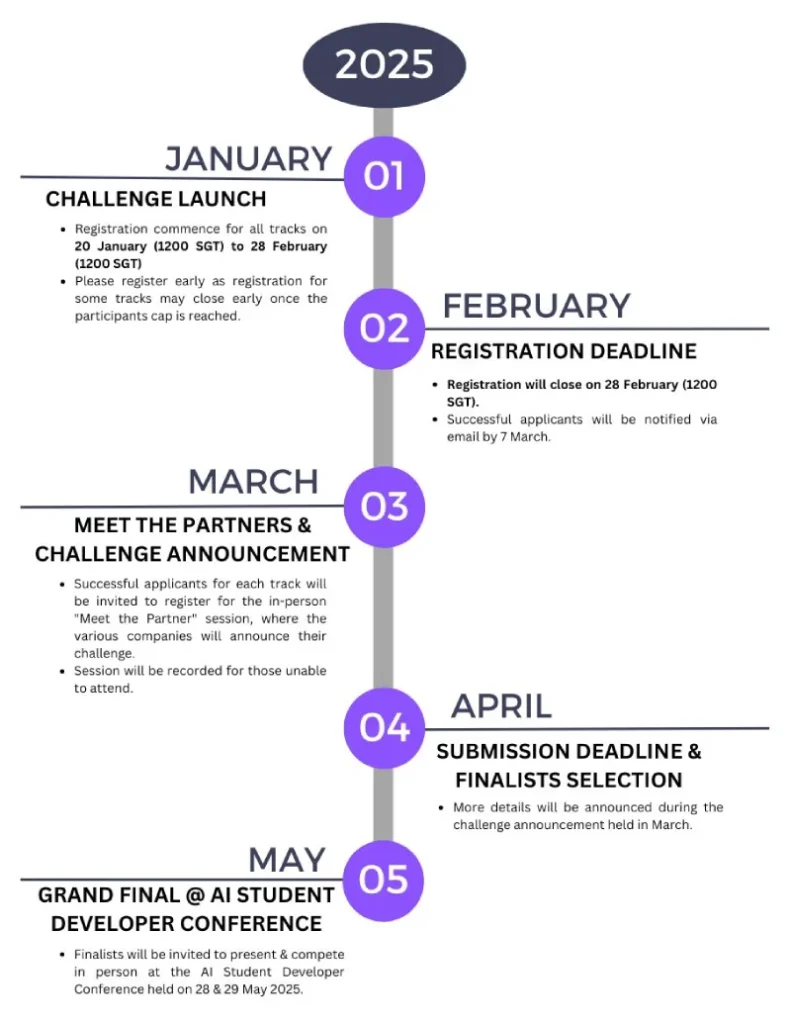
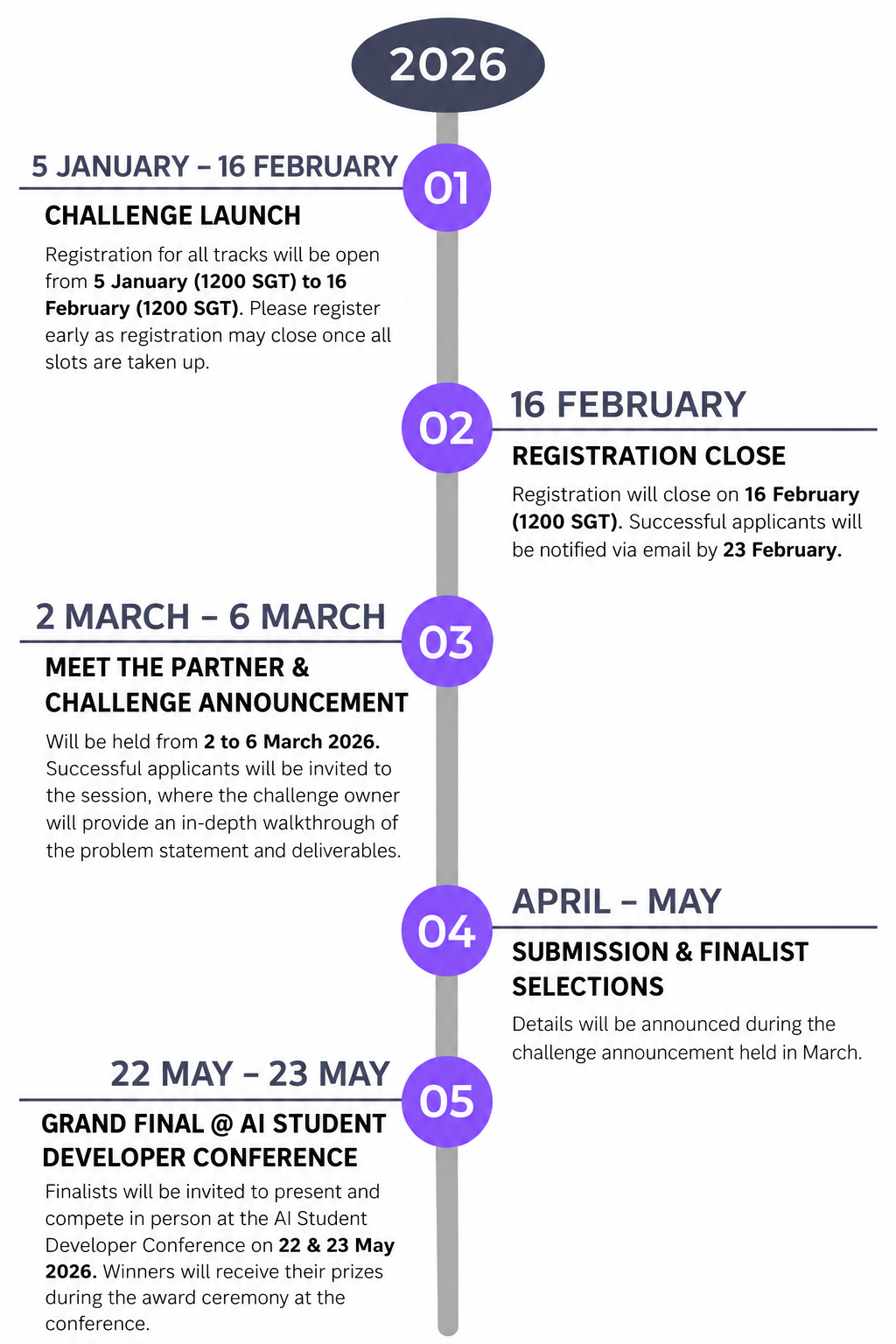
Registration for all tracks will be open from 5 January 2026 (1200 SGT) to 16 February 2026 (1200 SGT). Please register early as registration may close once all slots are taken up.
To register, open your preferred Challenge Track above and click on its registration link. Successful applicants will be notified via email by 23 February 2026.
Timeline
Enquiries
For enquiries, please contact naisc@aisingapore.org
Join Our Next Challenge!
Register your interest for the upcoming
National AI Student Challenge 2026!